
Ogilvy Germany created a innovative, content-driven, live marketing event for Germany’s largest electronics retailer, Media Markt (Ogilvy.) The original brief from Media Markt contained a dull 5% discount promotion for Easter (Ogilvy.) Instead, Ogilvy chose to incentivize customers to shop at Media Markt by offering the chance to win 50% off of their purchase. They orchestrated this by essentially turning their receipt into a betting ticket (Ogilvy.) Participation required customers to first make a purchase at the physical retail store. Then the “Rabbit Race” brought customers in front of the TV to willingly watch their advertisement. Customers had to collect their voucher at the store, which created an additional need for purchase (Ogilvy.)
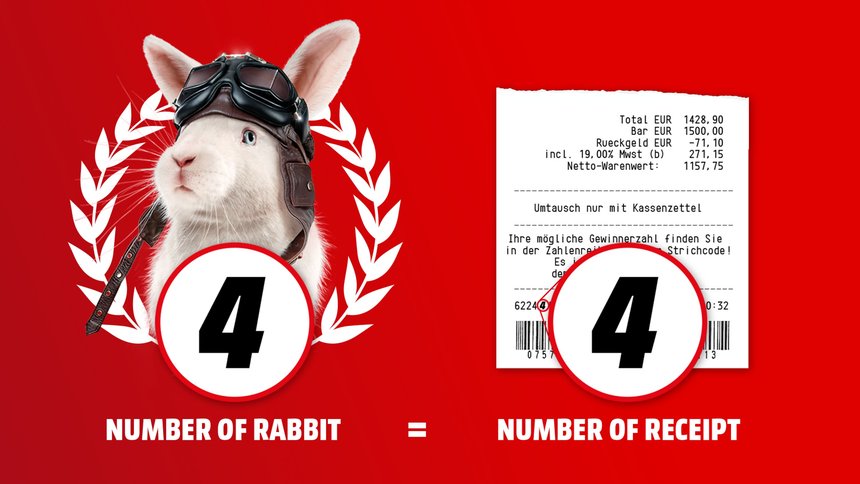
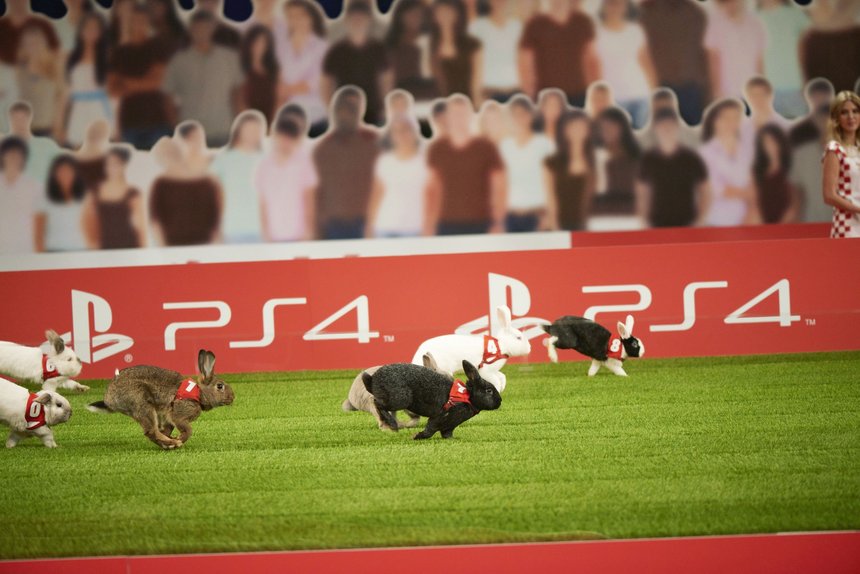
According to Ogilvy, their largest challenge in creating the Rabbit Race was to get the 9 largest German private TV stations in line to arrange a 2 minute live event primetime during the ad break (Ogilvy.) To build momentum, the campaign included 10 minutes of background stories, as well as behind the scenes material prior to and immediately following the race, which had never been achieved in Germany before (Ogilvy.) The idea required casting bunnies with strong visual characteristics. The agency then created background stories to accompany each of the rabbits. This enticed the viewer to root for the bunny that they identified with or liked the most (Ogilvy.) The bunnies were trained for three months by one of Germany’s best animal trainers to race each other in a custom built TV arena (Ogilvy.

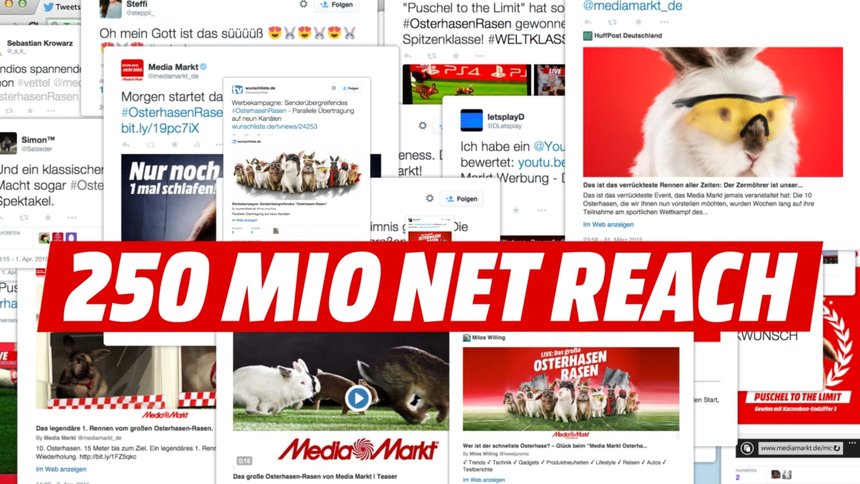
To say this campaign was successful is an understatement. Overnight the Rabbit Race turned Media Markt from Germany’s largest entertainment electronics retailer to the country’s largest entertainer overall (Ogilvy.) The live marketing event was considered both unprecedented and revolutionary. The results of the Rabbit Race included 21 million live viewers with an over 250 million net reach. The retailer saw a +18.2% customer increase, +250% interaction and +40% additional Facebook followers, +208% Twitter followers. #OsterhasenRasen generated about 6.3 million Twitter impressions (Ogilvy.) Osterhausen Rasen which translates to Easter Bunny Race, also earned Ogilvy Cannes Lions awards for Direct, Promotional & Activation, and Media (Ogilvy, 2016.)
This campaign could possibly be adapted to and successful in the United States, but there would certainly be adjustments that needed to be made in order to see similar results. Additional precautions would need to be taken in the US to ensure the brand didn’t face negative backlash on social media and news outlets. There would almost certainly be animal rights and animal cruelty advocates voicing their concerns, and understandably so. In the US, it would be important to publicly address that the rabbits were treated ethically, well taken care of, and trained by professionals. Even if careful steps were taken it still may be considered too risky. Comparable events, such as dog racing, are actually banned in most states rather than celebrated (Grey2K USA.) Even horse racing, once widely popular in the United States, is facing a decline in revenues. It is important to note that while negative public opinion on animal cruelty is a contributor, it is not the sole factor causing this decline (Reuters, 2016.)
This campaign could be adjusted to better suit public interest in the United States. The business model itself could still work well, but the back story would need to be altered. Americans love inspiring stories and causes they can share with their peers. Instead of making up false background stories about the rabbits, the campaign could instead feature true stories of rabbits that were rescued, nursed back to health, and have now grown strong enough to race with the help of their experienced trainers. At the completion of the event, footage could show the rabbits being released back into the wild, or to loving homes if they are domesticated rabbits. The American company that may be launching the campaign could also donate a portion of their proceeds to animal rescue groups to boost positive brand identity. By making these small changes, it will allow the customer to feel like they are supporting a good cause, with the added incentive of potentially being reimbursed a portion of their purchase price.
 Stephanie Milak
You must be logged in to post a comment.